
The Role of the Maintenance Planner: Responsibilities, Skills & Best Practice
Discover the role of a maintenance planner, key responsibilities, essential skills and best practices for improving maintenance efficiency and reliability.

When organisations look to improve maintenance performance, the focus is often placed on technicians, supervisors, systems and processes.
However, one of the most influential roles within any maintenance department is often overlooked: the Maintenance Planner.
A skilled maintenance planner can significantly improve labour utilisation, reduce maintenance backlog, increase schedule compliance and support asset reliability. By ensuring maintenance tasks are properly prepared before work begins, planners help maintenance teams operate more efficiently and minimise wasted time.
In many ways, the maintenance planner acts as the bridge between maintenance strategy and maintenance execution. Without effective planning, even the most experienced maintenance teams can struggle with delays, inefficiencies and reactive working.

Why Maintenance Planning Matters
Many maintenance organisations face common challenges:
Growing maintenance backlogs
Frequent interruptions and reactive work
Delays caused by unavailable parts or resources
Low technician productivity
Poor schedule compliance
Equipment reliability issues
In many cases, these problems are not caused by a lack of technical skill. Instead, they occur because work has not been properly planned before technicians arrive on site.
Research into maintenance productivity consistently shows that technicians spend a surprisingly low percentage of their working day carrying out productive maintenance activities. Time is often lost waiting for permits, searching for parts, obtaining information, travelling between locations or dealing with unexpected issues that could have been identified beforehand.
Effective maintenance planning helps eliminate many of these delays by ensuring work is fully prepared before it is scheduled and assigned.
What Does a Maintenance Planner Do?
The primary responsibility of a maintenance planner is to prepare maintenance work so that it can be completed safely, efficiently and with minimal disruption to operations.
Before a maintenance task reaches a technician, the planner should ensure that all necessary requirements have been identified and arranged.
This may include:
Defining the scope of work
Identifying required labour and skills
Confirming spare parts availability
Arranging specialist tools and equipment
Coordinating access requirements
Preparing permits and safety documentation
Developing detailed job plans and work instructions
Estimating task durations
By completing this preparation in advance, the planner enables technicians to focus on carrying out the work rather than solving logistical problems.
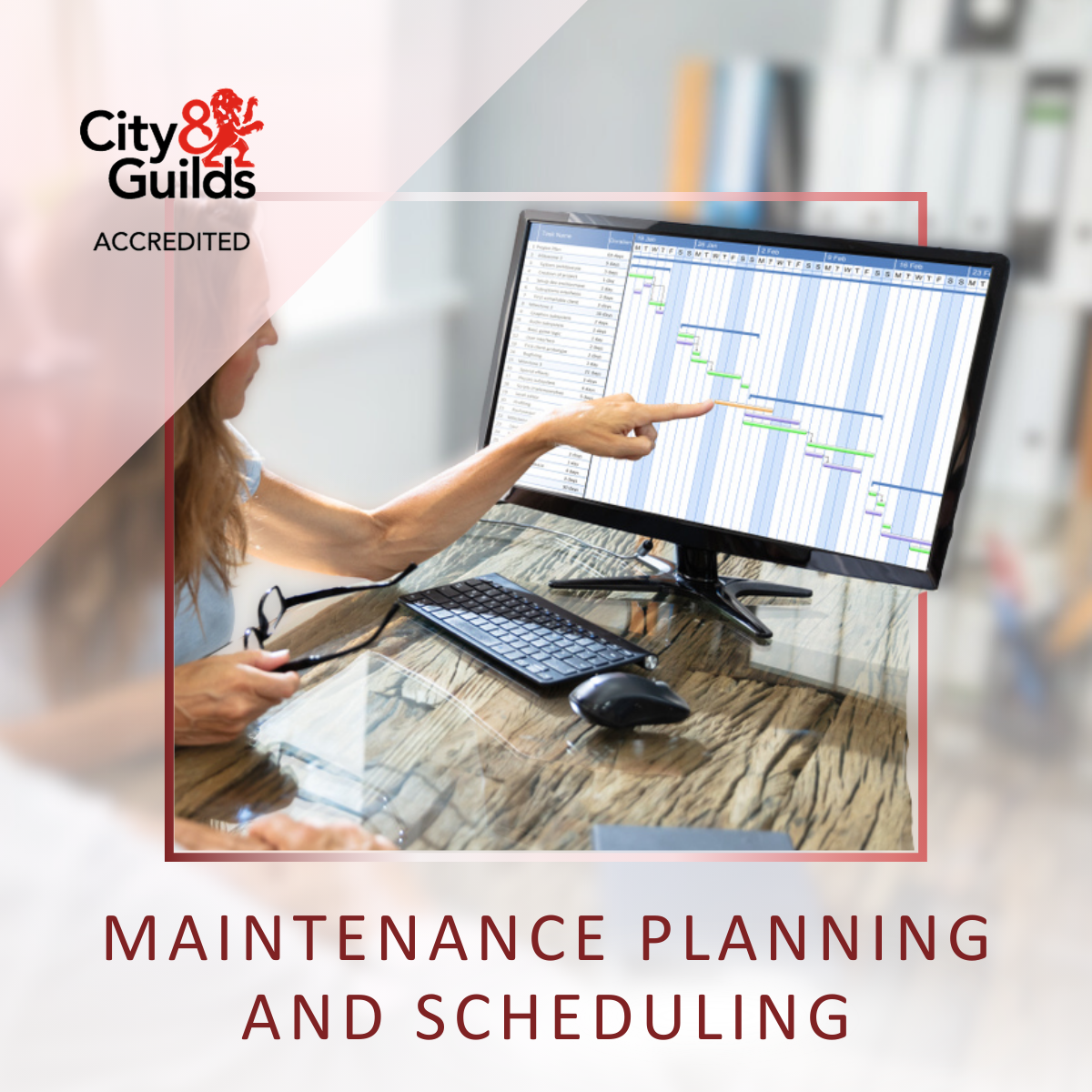
Prices Quoted Exclude VAT
Course Type | Maintenance and Asset Management
Certificate | City & Guilds Accreditation Certificate
Duration of Course | 2 Days
Location | Solihull Training Centre
Planning and scheduling are often discussed together, but they are not the same activity.
Maintenance planning focuses on determining what is required to complete a task successfully.
Maintenance scheduling focuses on deciding when the work will be completed and who will carry it out.
A useful way to think about it is:
Planning prepares the work.
Scheduling allocates the work.
Without effective planning, scheduling simply places unprepared jobs onto a calendar. Effective maintenance organisations understand that planning must happen before scheduling if productivity and reliability are to improve.
Typical Responsibilities of a Maintenance Planner
The exact responsibilities of a maintenance planner will vary depending on the size and complexity of the organisation. In larger facilities, planning may be a dedicated full-time role. In smaller organisations, planning responsibilities may be combined with scheduling, stores management or supervisory duties.
Typical activities often include:
Reviewing New Work Requests
Planners assess incoming maintenance requests and determine the resources required to complete the work.
Developing Job Plans
Clear job plans help technicians understand exactly what work is required, how it should be completed and how long it is expected to take.
Managing Spare Parts Requirements
Ensuring the right materials are available before work begins helps prevent delays and repeat visits.
Coordinating Resources
This may involve booking specialist contractors, arranging lifting equipment, organising access platforms or coordinating production downtime.
Supporting CMMS Data Quality
Maintenance planners often play an important role in maintaining accurate records within the Computerised Maintenance Management System (CMMS), improving the quality of maintenance history and future planning activities.
Monitoring Maintenance Performance
Many planners are responsible for producing reports and monitoring key performance indicators that support continuous improvement.
Skills of an Effective Maintenance Planner
Successful maintenance planners combine technical understanding with strong organisational and communication skills.
Technical Maintenance Knowledge
The most effective planners often have previous maintenance experience. Understanding maintenance activities enables planners to estimate labour requirements, identify potential risks and create realistic job plans.
Communication Skills
Planners work with maintenance technicians, supervisors, stores personnel, operations teams and contractors. Strong communication helps ensure everyone understands priorities and expectations.
Organisation and Attention to Detail
A planner may be responsible for coordinating dozens or even hundreds of maintenance activities. Effective organisation is essential to keep work flowing efficiently.
Problem Solving
Maintenance planning often involves identifying potential obstacles before work begins and finding practical solutions that minimise delays.
CMMS Proficiency
Modern maintenance planning relies heavily on maintenance management software. Planners must be comfortable using CMMS systems to create work orders, track resources, manage backlog and analyse maintenance data.
Best Practice Maintenance Planning
High-performing maintenance organisations typically follow a number of planning best practices.
Visit the Job Site
Planning should not be completed entirely from behind a desk. Visiting the asset or work area provides valuable insight into access requirements, safety considerations and task complexity.
Build Detailed Job Plans
The more information included within a job plan, the easier it becomes for technicians to complete work efficiently and consistently.
Confirm Material Availability
Before scheduling work, planners should ensure all required parts, materials and specialist equipment are available.
Use Historical Data
Maintenance history provides valuable information that can improve planning accuracy and help estimate labour requirements more effectively.
Work Closely with Operations
Effective planning requires collaboration between maintenance and operations teams. Early communication helps avoid conflicts and minimise disruption to production activities.
Continuously Improve
Planning should be treated as an evolving process. Regular reviews help improve job plans, increase accuracy and identify opportunities to reduce maintenance costs and downtime.
Supporting Reliability Through Effective Planning
Perhaps the greatest contribution a maintenance planner makes is supporting asset reliability.
When maintenance work is properly planned:
Preventive maintenance is completed more consistently.
Technicians spend more time carrying out productive work.
Delays and interruptions are reduced.
Maintenance backlog becomes easier to manage.
Asset availability improves.
Equipment failures are less likely to occur.
In short, effective planning creates the conditions necessary for maintenance teams to succeed.
Measuring Success
Like any maintenance process, planning performance should be measured and reviewed.
Common planning and scheduling KPIs include:
Preventive Maintenance Schedule Compliance
Planning Accuracy (estimated versus actual hours)
Schedule Compliance
Maintenance Backlog
Number of Break-In Jobs
Percentage of Planned Work
Number of New Job Plans Created
Monitoring these metrics helps organisations identify improvement opportunities and demonstrate the value effective planning brings to maintenance performance.

Other Training for Experienced Managers



A Critical Role
The maintenance planner plays a critical role in improving maintenance efficiency, asset reliability and workforce productivity. By ensuring maintenance tasks are properly prepared before execution, planners help eliminate delays, improve resource utilisation and support more effective maintenance operations.
Whilst technicians perform the work and supervisors coordinate day-to-day activities, it is often the planner who creates the conditions for success. Organisations that invest in effective maintenance planning processes are typically rewarded with improved reliability, lower maintenance costs and a more productive maintenance team.
To learn more about implementing effective planning processes, explore MCP’s Maintenance Planning & Scheduling training course, designed to help maintenance professionals improve planning performance, reduce backlog and increase maintenance efficiency.